

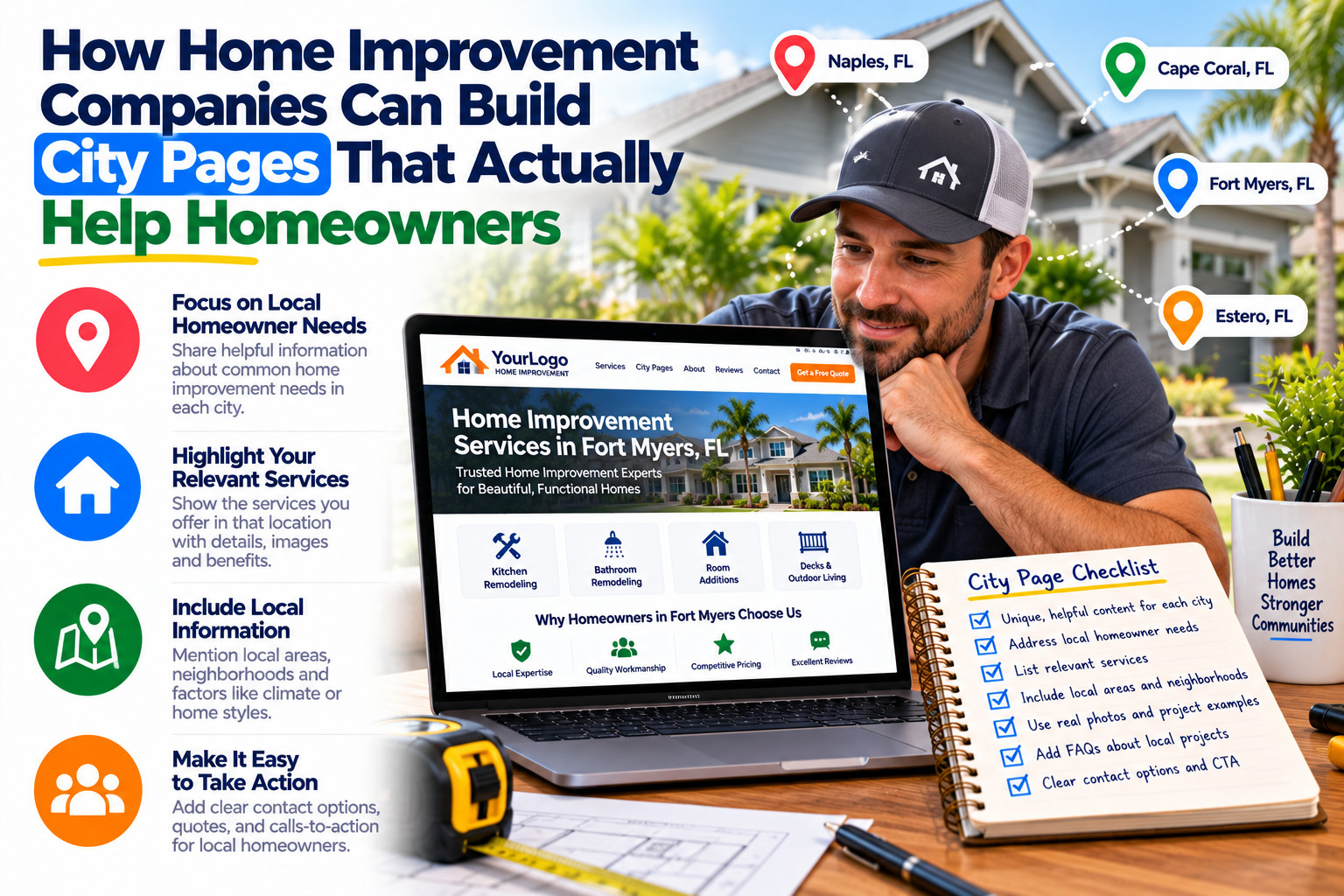
How Home Improvement Companies Can Build City Pages That Actually Help Homeowners
October 27, 2026 · Admin
A remodeling company near Minneapolis serves eight suburbs. A marketing vendor offers to create a page for each one, all with the same text and only the city name swapped. Six months later, the pages bring in almost no inquiries, and the owner wonders whether they hurt more than they helped.
Service-area pages can be useful when they give homeowners in each town something real to read. Copies with a new city name rarely do.
Why Thin City Pages Fall Short
Google’s spam policies describe doorway pages as pages created to rank for similar searches that lead users to largely the same content. A set of near-identical city pages fits that description. Even when they do not trigger a problem, they give a homeowner in Edina nothing that a homeowner in Plymouth would not also see.
Readers notice. A page that says “We proudly serve Edina” and nothing else does not explain whether you have worked in that town, understand its housing stock, or know its permit process.
What Makes a City Page Worth Reading
Build pages only for towns where you work regularly and have something specific to say. Mention real projects there, with the homeowner’s permission, such as a kitchen remodel in a 1950s rambler. Explain local details customers care about, like permit requirements, common home styles, or typical project timelines in that area.
Add photos from local jobs and reviews from customers in that town. Include a short FAQ with questions you hear from homeowners there. Each page should read as if a person who knows the area wrote it, because one did. A short note about the crew or project manager who handles jobs in that town adds a personal touch.
Start Small and Keep the Structure Clean
Begin with your three or four busiest towns, then add more as you complete projects and collect material. Link each city page from a main service-area page, and link back to your core service pages. Keep your Google Business Profile service area consistent with the towns you feature.
Your directory listings should reflect the same coverage. Contractors listed in the Home Improvement Services category on Clickography can name their main service towns in the description, matching the city pages on their website. A Clickography listing that mirrors your real service area helps homeowners confirm you work in their community.
Write for the Homeowner in Each Town
City pages work when they contain real local knowledge. Skip the copied templates, build pages for towns where you have projects and reviews to share, and add specific details about permits, homes, and timelines. Keep your service area consistent across your website, Google, and directories like Clickography.
Frequently Asked Questions
City pages are not bad by themselves. Problems come from large numbers of near-duplicate pages with little unique value, which Google's spam policies describe as doorway pages. Pages with real local projects, photos, reviews, and information can help homeowners and support your visibility.
Create pages only for towns where you work regularly and can provide unique content. For many local contractors, that means a handful of pages rather than dozens. Add new pages as you complete projects and gather reviews in additional towns.
Include the services you offer in that town, real project examples, local photos, reviews from nearby customers, and helpful details like permit requirements or common home styles. Add a short FAQ based on questions homeowners in that area ask. Make each page useful by itself.
Reusing a short shared description of your services is common, but most of each page should be unique. If the only difference is the city name, the page offers little value. Focus the unique content on local projects, conditions, and customer questions.
Related Articles

Zero-Click Searches: How Restaurants Win Diners Who Never Visit the Website
A couple in Portland searches for Thai food at 8:30 on a Tuesday. They glance at hours, a few menu photos, and…
Read More →
How Healthcare Practices Can Turn Real Patient Questions Into Helpful FAQ Content
The front desk at a physical therapy clinic in Denver answers the same questions every day. Do I need a referral? Does…
Read More →
How Data Aggregators Spread Your Business Information Across the Web
An equipment rental company in Houston changed its phone number three years ago. It updated its website and Google profile right away.…
Read More →